Car will not start - what to check first
Before calling for a tow, check five things first. Most of the time the car is fine and you just need a boost, a fuse, or a key that talks to the transponder.
What you'll learn
- The difference between dead-battery symptoms and starter symptoms
- Why a clicking noise usually means battery, not starter
- When a stuck shift interlock prevents start (and how to bypass)
- Why transponder keys fail and what to try first
Step by step
- Check the dashboard. Do any lights come on when you turn the key to ON?
- Try turning the key (or pushing start) with the brake held firmly.
- If you hear rapid clicking, the battery is low. Try a jump.
- If you hear one click or silence, the starter or ignition may be bad.
- Check that the key fob has battery (swap with a spare if you have one).
- If the transmission is not fully in Park, move the shifter and try again.
If you have tried all five and the car still will not start, you need a tow. Ask the assigned operator what they can check on scene before quoting a tow.
Ignition problems do not always require towing
A tow isn't always necessary, because the symptoms may point to a dead battery, a dead starter, or a locked steering column instead of a failing ignition switch. The answer depends on what happens at ON and START. A failing switch can interrupt power between the key and the car's electrical systems. That feels different from a weak battery, dead starter, or locked steering column.
Read what the car does
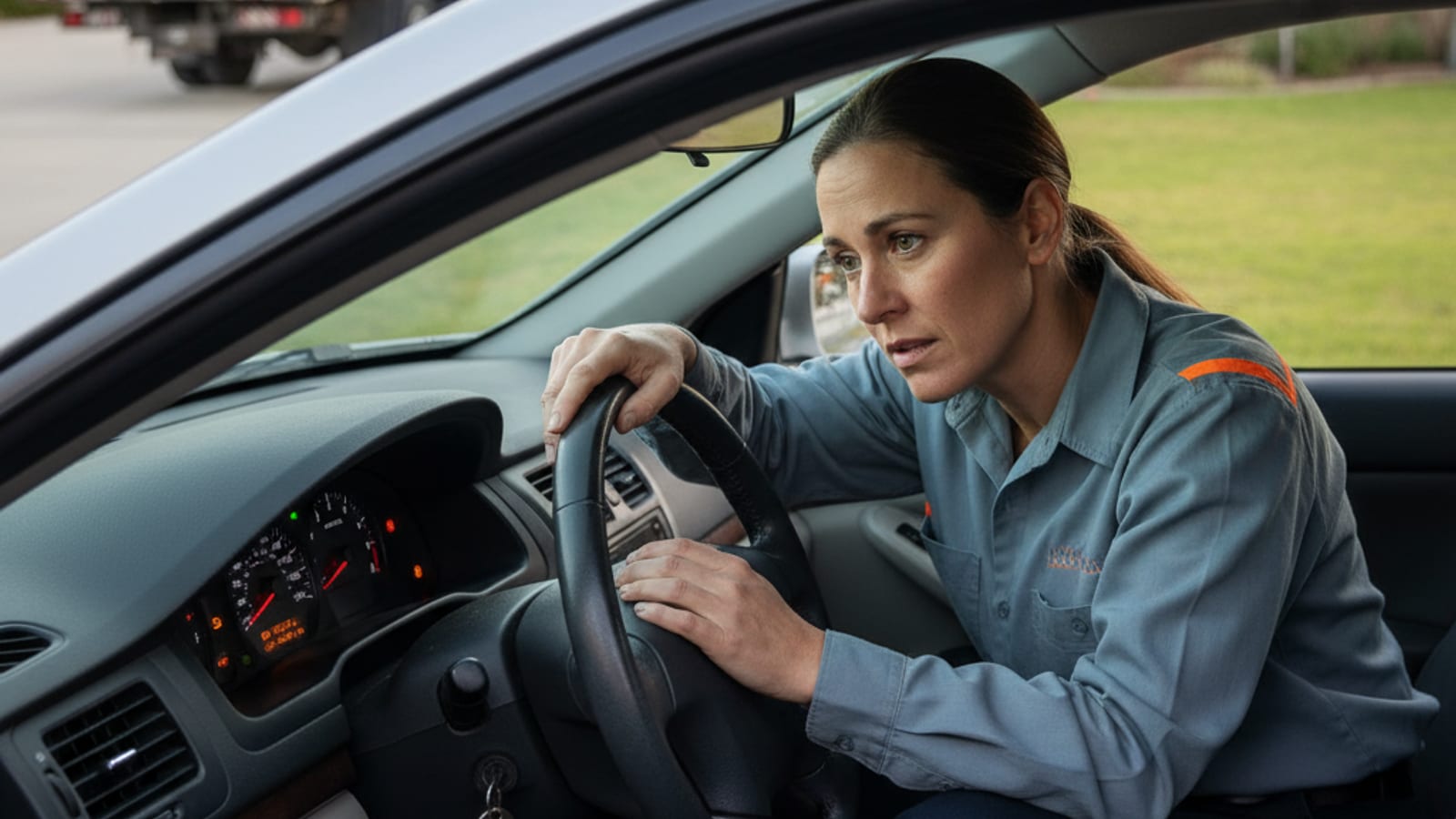
Sit in the driver's seat and turn the key to ON. Don't force the key or remove trim around the steering column. Watch the dashboard and listen for changes.
- If the dashboard stays dark, the battery may be discharged. It may also mean the ignition switch isn't sending power. Working headlights or accessories make the switch more suspect, but they don't confirm the diagnosis.
- If the dashboard lights normally but START produces one click, the starter circuit may be the problem. Rapid clicking points more often toward low battery power.
- If the dashboard powers up, but everything cuts out when the key moves, the ignition switch may have an intermittent connection.
- If accessories flicker or die when you gently move the key, stop after one test. That pattern can point toward the switch or ignition cylinder.
- If the key won't rotate, the steering column may be locked. Hold light pressure on the steering wheel while gently turning the key. Never force either one.
- If the key turns normally but nothing changes at ON or START, the switch or another part of the starting circuit may have failed.
These checks identify patterns, not a final repair diagnosis. The operator can use them to choose suitable equipment and plan the pickup.
When the car might move without a tow
An intermittent switch may make contact when the key is held gently in position. A locked steering column may also release with light wheel pressure. If the engine starts and remains stable, you may be able to move the car from an immediate parking restriction.
Don't count on an intermittent ignition for a longer trip. If the engine cuts out when the key settles back, shut down the attempt. A key that won't rotate also needs professional attention. Those situations call for a tow instead of repeated testing.
Stop after one or two attempts
Repeated cranking won't repair a failing switch. Repeated jump attempts also waste time when the battery isn't the problem. Make one or two careful attempts, then call. Stop sooner if you smell burning, see smoke, or notice hot wiring near the steering column.
A no-start can become a Boston impound
Location matters when your car won't move. A resident permit doesn't override street cleaning or a declared snow emergency. During a snow emergency, Boston tows vehicles from posted emergency arteries.
Boston's city tow fee is $90. City storage is $3 per hour, up to $15 per day. Street-cleaning enforcement uses private tow companies. Boston lists that tow at $108, with $35 per day for storage. Posted street signs control when they differ from online information.
Outside Boston, the city tow lot's fees don't apply. Massachusetts DPU maximums govern many police-ordered and private-property tows. The state maximum is $132 for the first five miles, then $4.40 per additional mile. Qualifying secured outdoor storage has a state maximum of $35 per 24-hour period.
What to tell the dispatch line
Give the line details that help an operator quote the job correctly:
- Your exact location and nearby entrance or cross street
- Whether the key turns, binds, or won't rotate
- What the dashboard does at ON and START
- Whether the car rolls, steers, and shifts into neutral
- Whether all wheels turn freely
- Whether it's in a garage, parking lot, or street space
- Any height limit, narrow entrance, or blocked access
Quick Tow Boston takes the call and lines up a local operator. Clear symptoms and access details help the assigned operator prepare an accurate quote.
Rather have a pro handle it?
Towing and roadside service across Greater Boston. One local line, taking calls any hour.
Keep learning.
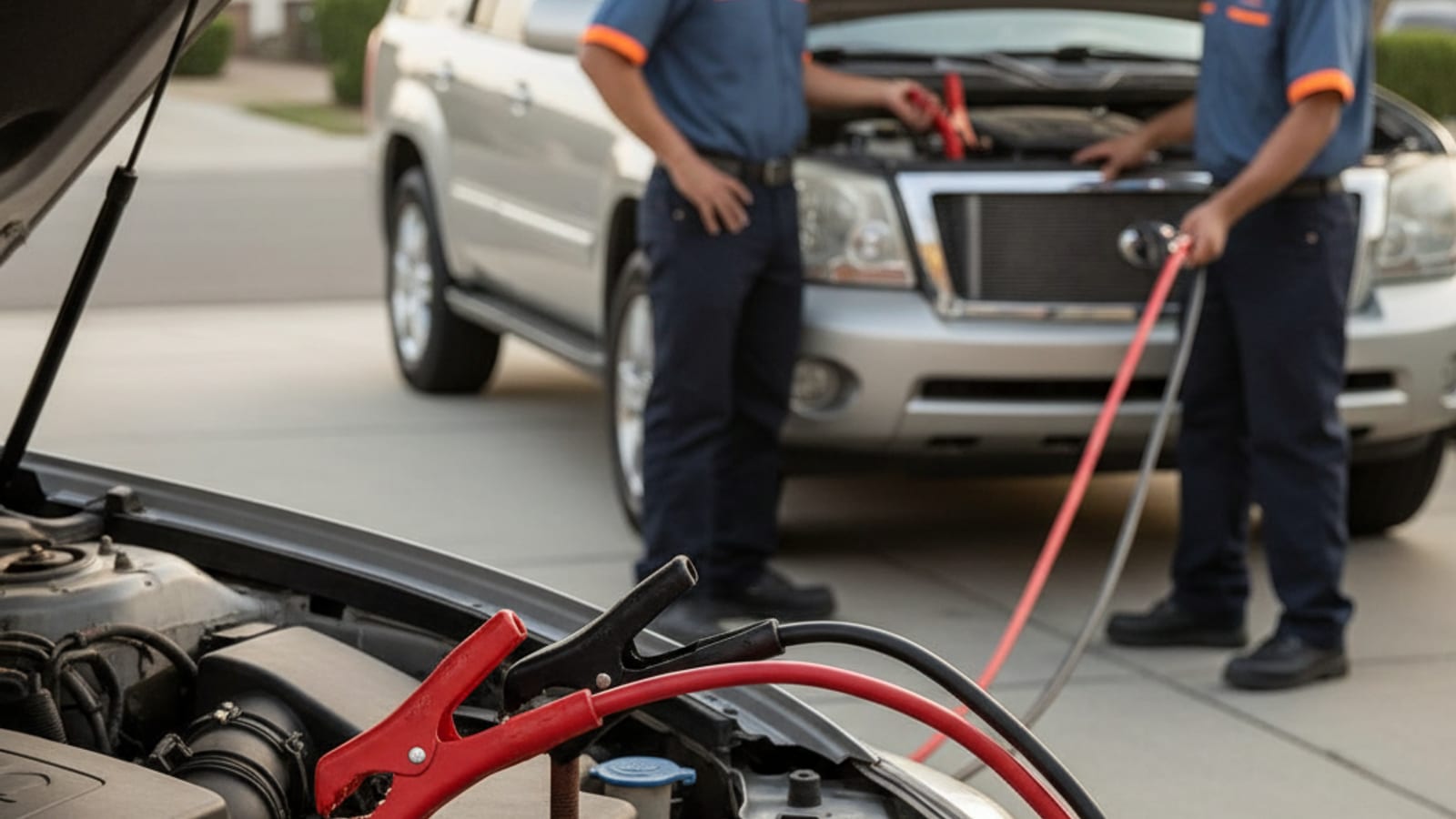
Jump-start a dead battery safely
Turn both cars off. Connect red to the dead battery's positive terminal, then red to the donor's positive. Connect black to the donor's negative. Attach the last black clamp to bare metal on the dead car's engine block, not its battery, to avoid sparks there. Start the donor, wait, start the dead car, then let it run before driving.
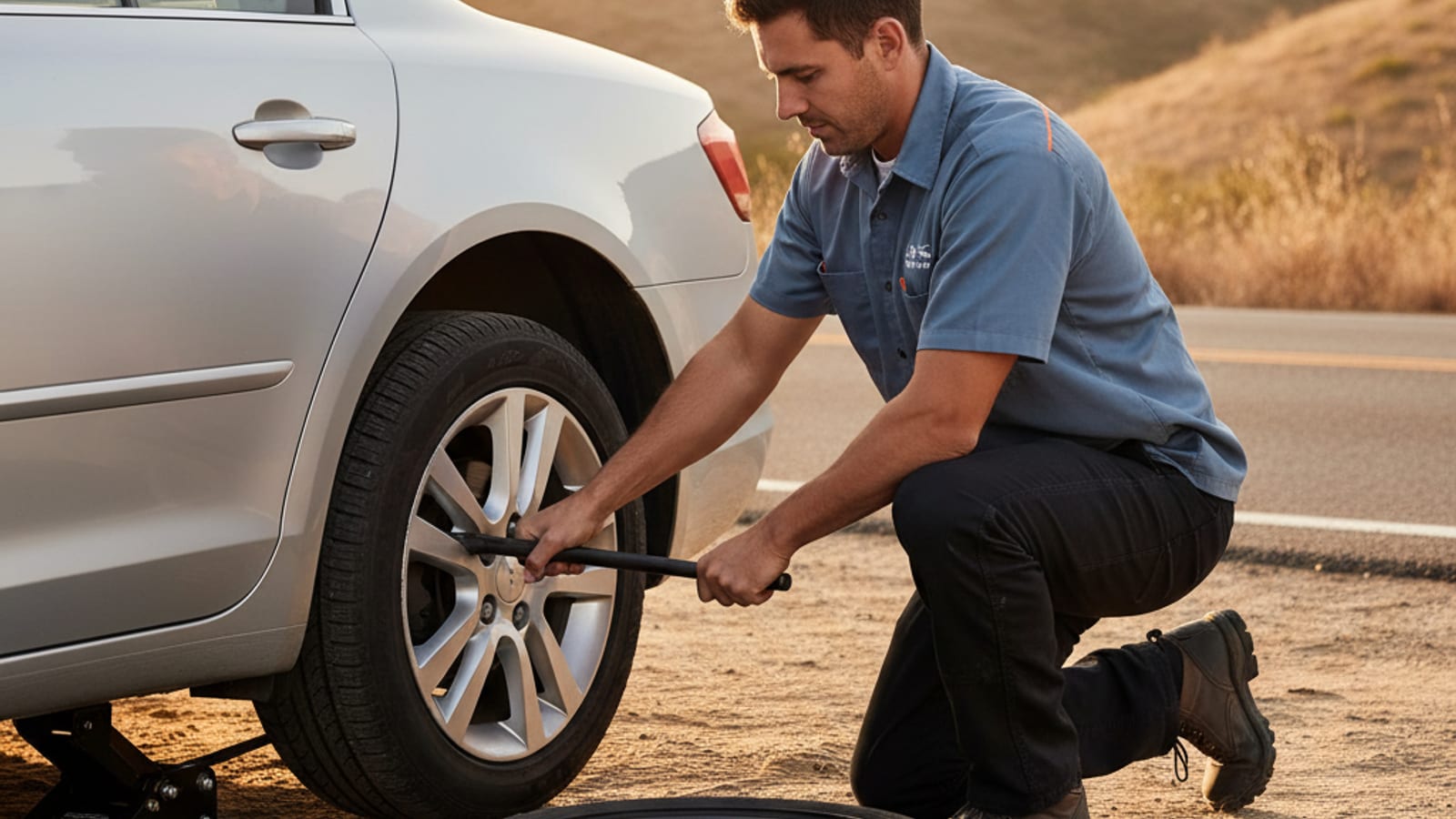
Change a flat tire on the side of the road
The difference between a 20-minute shoulder stop and an hour on the phone with a tow company is knowing where the spare and jack live before you need them.
What to do if you slide on ice or hit a flooded street
Boston winters glaze bridges and ramps before flat streets, and a coastal storm or a king tide floods low waterfront streets faster than it looks. First step: stop making it worse.