Jump-start a dead battery safely
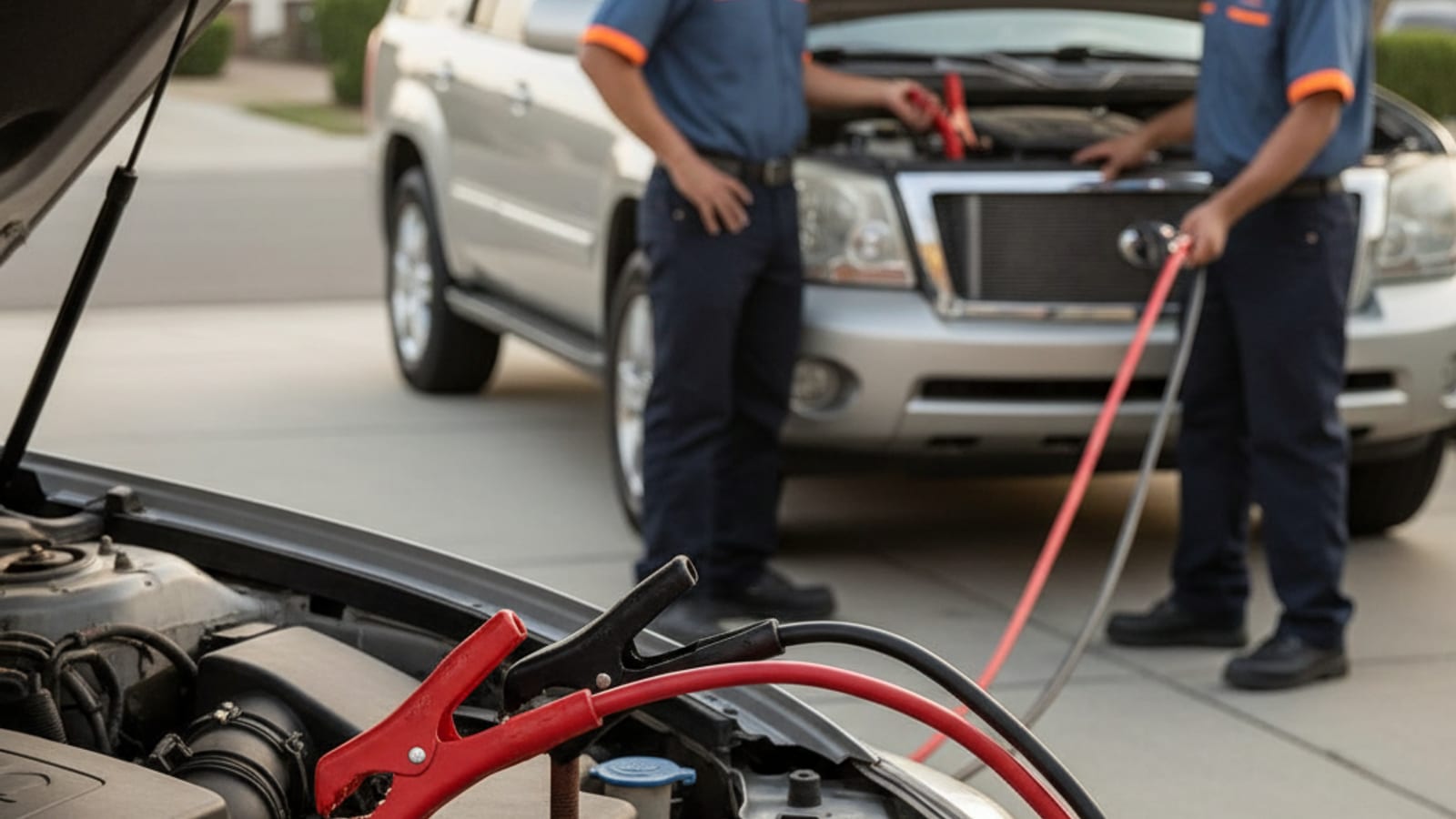
Turn both cars off. Connect red to the dead battery's positive terminal, then red to the donor's positive. Connect black to the donor's negative. Attach the last black clamp to bare metal on the dead car's engine block, not its battery, to avoid sparks there. Start the donor, wait, start the dead car, then let it run before driving.
What you'll learn
- The correct red-then-black clamp order (and why it matters)
- Why the last clamp goes on a bare metal point, not the dead battery
- When a jump-pack beats a cable-to-cable jump
- Signs that the alternator is bad and a jump will not fix the car
Step by step
- Pull the donor car close enough for the cables to reach. Both cars OFF.
- Clamp RED to POSITIVE (+) on the dead battery.
- Clamp RED to POSITIVE (+) on the donor battery.
- Clamp BLACK to NEGATIVE (−) on the donor battery.
- Clamp BLACK to bare metal on the dead car's engine block (not the battery).
- Start the donor. Wait 2 minutes. Start the dead car. Let run 10 minutes before driving.
If the car cranks weakly or dies again within an hour, the alternator or battery has failed. A second jump will not help, so call for a tow to a shop. Boston batteries take a beating from a long, cold winter and a hot, humid summer, and the freeze-thaw swings are hard on an aging battery. If yours is more than three years old and it has died once this winter, replace it before it strands you on a night when every operator in the metro is already committed.
After the engine starts
A successful jump gets the engine running. It doesn't repair the battery or charging system. The battery still needs time to recover enough charge for the next start.
Take a sustained drive if the car runs normally. Avoid shutting it off after moving only a few blocks. A short idle or quick trip may not replace enough of the charge used during the start.
Watch the dashboard while you drive. Stop somewhere safe if the battery warning light stays on, the lights begin dimming, or the car loses electrical power. Those signs can point to a charging problem.
A car that dies when the cables come off needs more than another attempt. The battery may not hold a charge, or the charging system may not be working. Arrange roadside help or a tow to a repair shop.
Cold weather exposes a weak battery
Greater Boston winters are hard on aging batteries. Cold reduces the power available for starting. At the same time, a cold engine needs more power to turn over.
A battery can seem fine during a mild October morning, then fail during the first hard freeze. Slow cranking, flickering interior lights, and repeated clicking are useful warnings. Don't ignore them after the car starts.
Have the battery and charging system tested before the next cold night. That matters even more if the car sits outside in Allston, Dorchester, Cambridge, or another neighborhood where moving it later could become difficult.
Check the posted parking signs before leaving a disabled car at the curb. Boston's street-cleaning season runs from April 1 through November 30. It continues through December 31 in the North End, South End, and Beacon Hill. The posted sign controls when it differs from online information.
Modern cars need vehicle-specific instructions
Modern vehicles contain sensitive computers, control modules, and charging systems. Correct connection points matter because the battery may sit behind a cover or outside the engine compartment.
The owner's manual is the authority for your vehicle. Look for its jump-starting section before connecting a cable or portable pack. It should identify the approved positive terminal, ground point, and any steps required before starting.
A lithium jump pack can be useful where another car can't park safely. Follow the pack's instructions and confirm that it matches the vehicle's electrical system. Don't bypass a warning light, damaged cable, or reverse-polarity alert.
Remove jewelry and keep loose clothing away from moving engine parts. Keep the pack and cables clear of belts, fans, and hot surfaces. If the manual's directions conflict with general advice, follow the manual.
Hybrids and electric vehicles are different
Hybrids and electric vehicles have a small 12-volt battery that powers computers and control systems. That battery can go flat even when the high-voltage traction battery has charge.
An ordinary jump procedure does not recharge the high-voltage traction pack. Don't touch orange cables, high-voltage components, or damaged battery housings. Use only the 12-volt connection points identified in the owner's manual.
If an electric vehicle won't wake after a manual-approved 12-volt procedure, plan for a tow. Many EV manuals call for flatbed transport, but the correct method depends on the vehicle. Tell the assigned operator the year, make, model, and whether the wheels can roll.
Visible collision damage, standing water, smoke, or unusual heat changes the situation. Step away from the vehicle and use emergency services when there's an immediate danger.
Know when to stop trying
Don't attempt another jump when the battery case is cracked, swollen, or leaking. Stop if you smell rotten eggs or notice heat, smoke, sparks, or melted wiring. Keep people away from the vehicle and don't handle the damaged battery.
Two failed attempts are enough. Repeated attempts can add risk without solving the underlying fault. The problem may involve the starter, battery, charging system, wiring, or another electrical component.
Call the Quick Tow Boston dispatch line at (857) 858-5057 when you need an operator. Calls are taken at any hour. We'll connect you with a local operator for roadside help or towing.
Have these details ready:
- Your exact location, including the nearest cross street or highway exit
- The vehicle's year, make, model, and color
- Whether it's a gasoline, hybrid, or electric vehicle
- What happens when you press the start button or turn the key
- Any warning lights, smells, leaks, heat, or visible damage
- Whether the vehicle is in traffic, a garage, or a restricted parking space
Rather have a pro handle it?
Towing and roadside service across Greater Boston. One local line, taking calls any hour.
Keep learning.
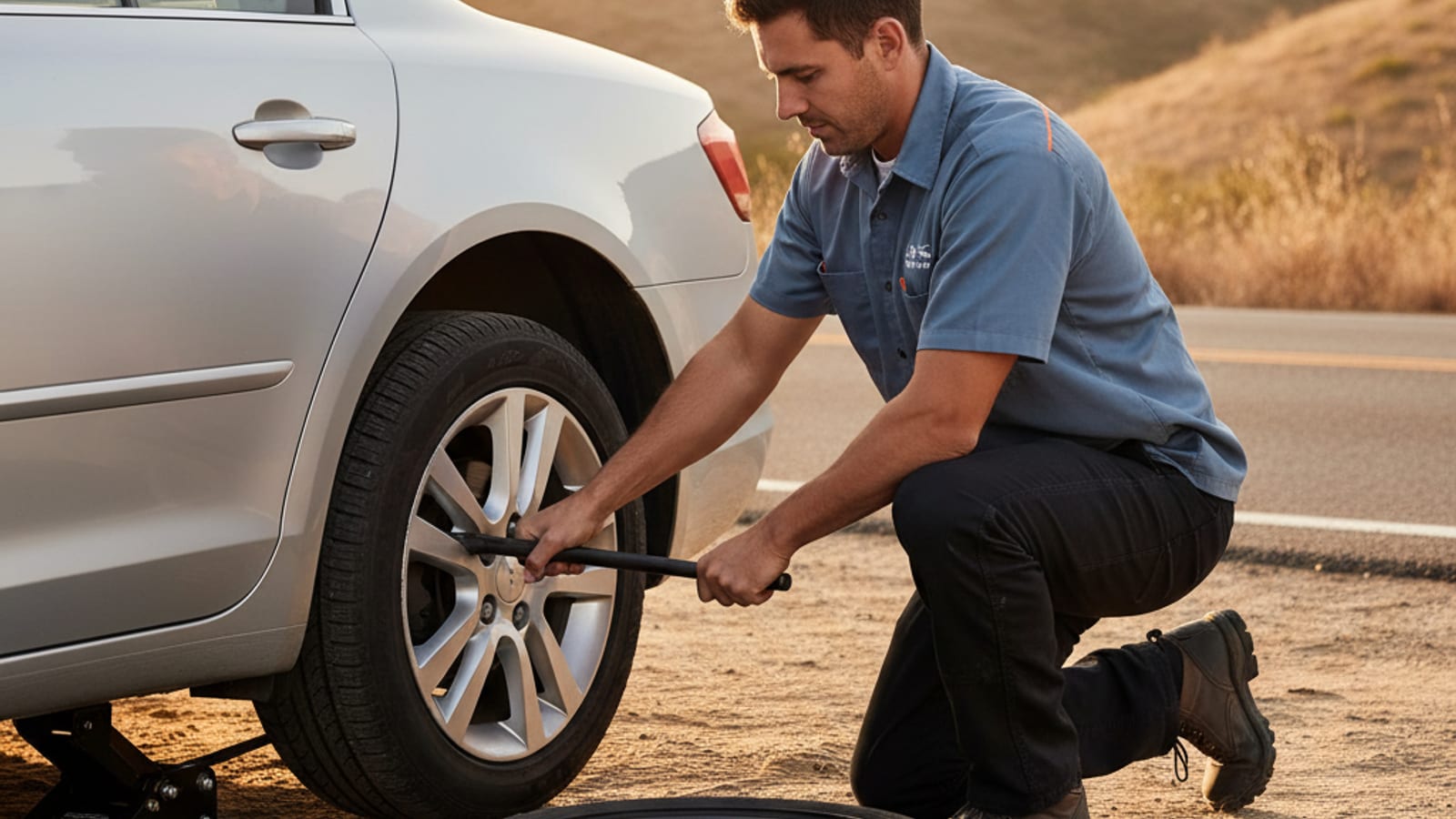
Change a flat tire on the side of the road
The difference between a 20-minute shoulder stop and an hour on the phone with a tow company is knowing where the spare and jack live before you need them.
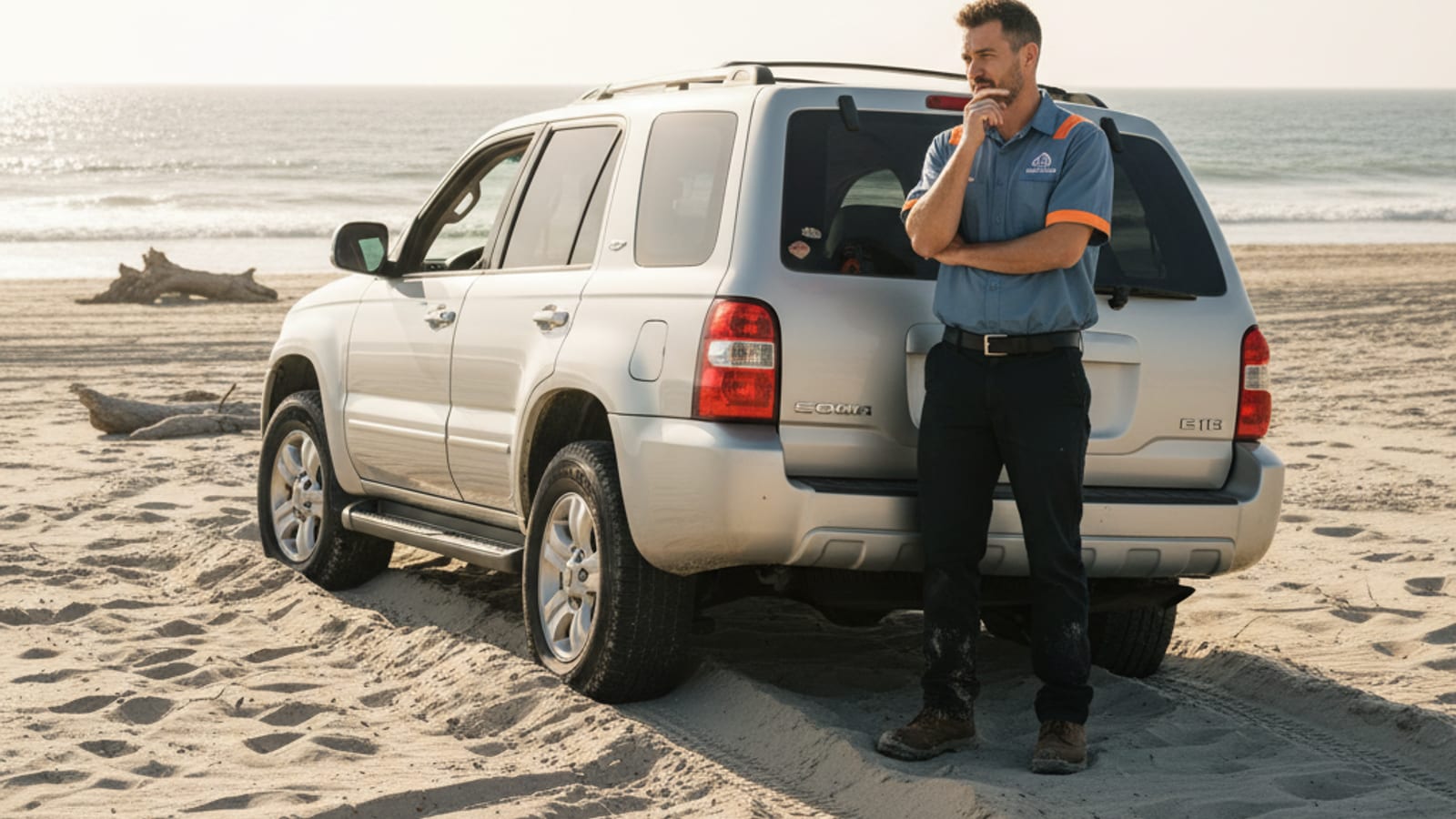
What to do if you slide on ice or hit a flooded street
Boston winters glaze bridges and ramps before flat streets, and a coastal storm or a king tide floods low waterfront streets faster than it looks. First step: stop making it worse.
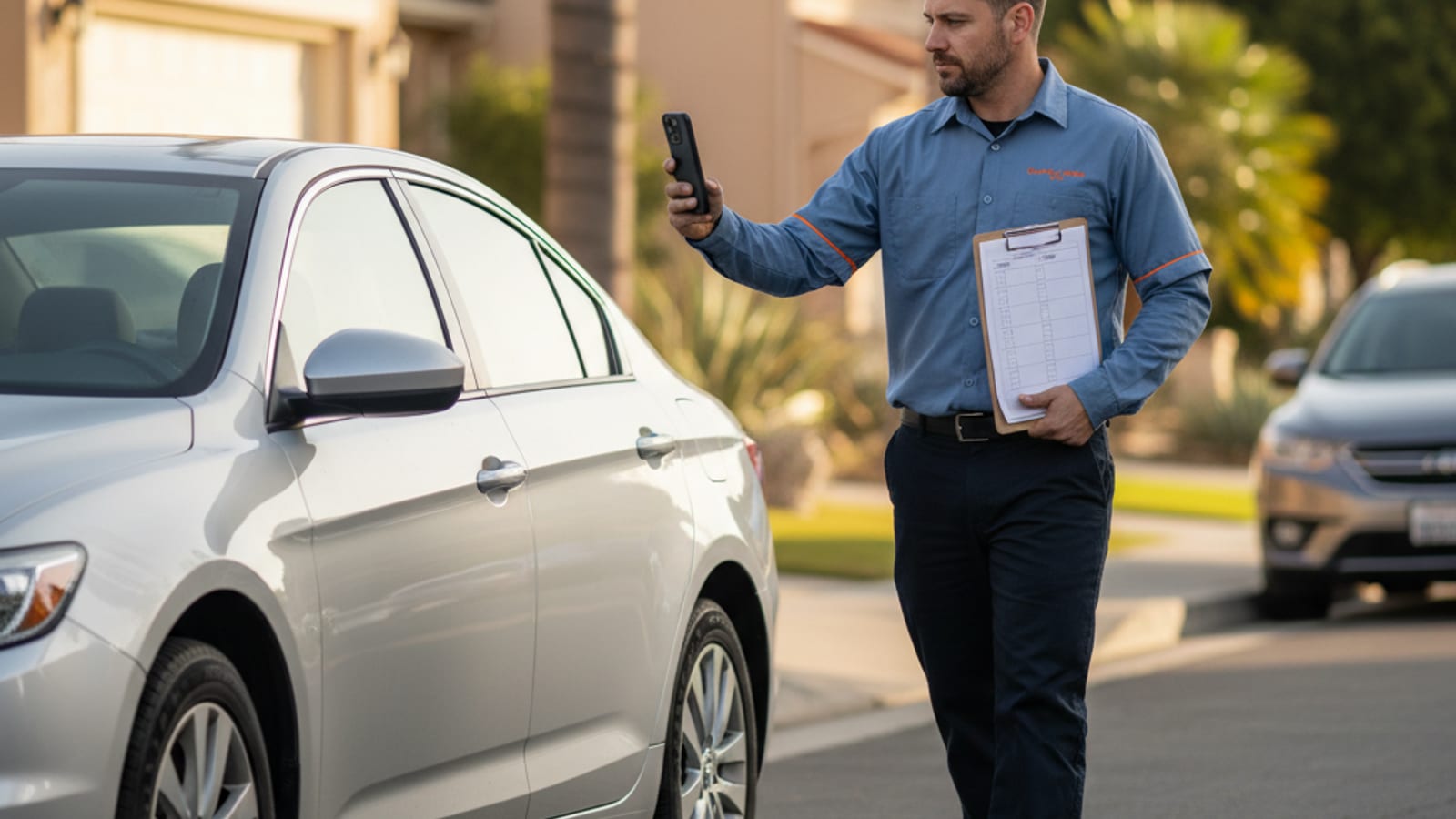
Prepare your vehicle for a tow
A few minutes of prep before the tow truck arrives saves time, avoids damage, and makes the whole call go faster.