Change a flat tire on the side of the road
The difference between a 20-minute shoulder stop and an hour on the phone with a tow company is knowing where the spare and jack live before you need them.
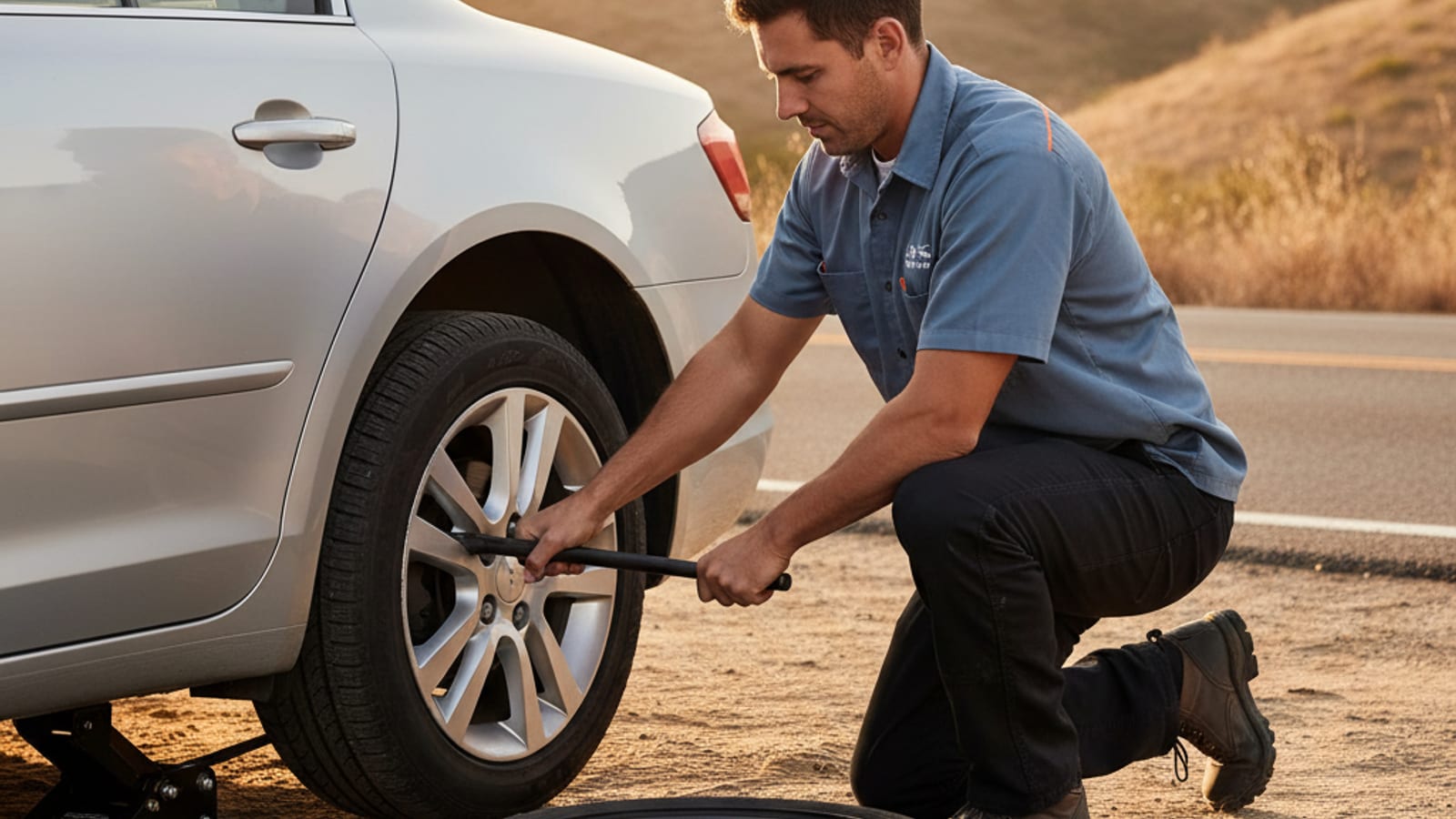
What you'll learn
- Why the traffic-side of a vehicle is the dangerous side for a DIY change
- Where the jack point is on most modern vehicles (check the owner's manual)
- The correct lug-nut loosening pattern (star/cross, not circle)
- When to call for a tow instead - highway shoulders, curbs without room, or damaged sidewalls
Step by step
- Pull off into a safe flat spot - away from traffic, off a shoulder if possible.
- Set the parking brake. Turn on hazard lights. Put the transmission in park (or 1st gear on manual).
- Loosen the lug nuts half a turn each before jacking - while the tire is still on the ground.
- Position the jack at the factory jack point under the frame. Raise until the tire is 1-2 inches off the ground.
- Remove the lugs, swap the flat for the spare, hand-tighten lugs in a star pattern.
- Lower the car fully. Torque the lugs in the same star pattern.
- Drive directly to a tire shop. The speed and distance limits for a temporary spare are printed on its sidewall and in the owner's manual.
If you are on the shoulder of I-93, the O'Neill Tunnel, the Mass Pike, Route 128 or a bridge approach, call for a tow to a safe lot instead. In places there is no usable shoulder at all, so a roadside tire change there is genuinely dangerous. MassDOT runs a Highway Assistance Program, free to the driver, that changes flat tires, handles minor mechanical problems, clears debris and gives emergency medical help. Dial 9-1-1 to request it. It is not a tow and it does not repair a car.
Decide whether the location is safe
A flat tire doesn't always belong on a jack. First, look at where the car stopped and which tire failed. A quiet residential street in Brookline or Watertown may offer enough level space. The shoulder of I-93, the Mass Pike, Route 128, Storrow Drive, or the Tobin Bridge approach does not.
Don't kneel beside moving traffic to reach a traffic-side tire. Stay buckled inside the vehicle if that's the safest available place. If you can get behind a barrier without crossing traffic, wait there instead. Call the dispatch line and explain your exact location.
Don't attempt the change on a curve, narrow ramp, bridge approach, or tunnel roadway. The same applies when the shoulder disappears ahead. Hazard lights help other drivers see the car, but they don't create working space.
Check what the car actually carries
Some modern vehicles have a compact spare. Others carry a sealant bottle and electric inflator instead. A few have no spare or repair kit at all. Open the cargo area and confirm what's present before deciding what to do.
A sealant kit may help with a small puncture in the tread. It won't restore a torn sidewall, damaged wheel, or tire that has separated. Read the kit instructions before connecting anything. Check its expiration date, and don't use it when the instructions exclude the damage you see.
If there's no usable spare or repair kit, the car needs roadside help or a tow. Tell the dispatcher what equipment you found. That detail helps the assigned operator understand whether the request involves a tire change, air, or vehicle transport.
Treat a temporary spare as temporary
A compact spare, often called a donut, is meant to get the car off the road. It isn't a replacement for the damaged tire or a normal week of commuting. Its smaller size can also change how the car steers and brakes.
Read the spare's sidewall before driving. The permitted speed and distance are printed there. The owner's manual may add vehicle-specific instructions. Follow the lower limit when the tire and manual differ.
Drive directly to a tire shop or another safe repair location. Avoid unnecessary highway travel and sharp maneuvers. If the spare looks cracked, soft, or damaged, don't rely on it. A spare that has sat untouched for years still needs proper air pressure and sound rubber.
Know when the car needs a tow
Some damage can't be solved beside the road. A torn sidewall, separated tire, bent wheel, or cracked rim needs closer inspection. The same is true when the car dropped onto the rim and continued moving.
Stop if the lug nuts won't break loose with the supplied wrench. Don't jump on the wrench or add a makeshift extension. A missing locking-lug key also ends the roadside attempt. Tell the dispatcher about the lock so the assigned operator arrives with the right information.
Rust can make an otherwise simple change unsafe. Don't lift the car if the factory jack point is badly corroded, bent, or collapsing. Uneven ground creates another problem. Snowbanks, ice, soft shoulders, and sharply crowned streets can let a jack shift as the vehicle rises.
Greater Boston winter conditions can turn a manageable flat into an unstable lift. Move only when the vehicle can roll safely to a nearby level spot. Don't drive far on a flat tire just to find better pavement. That can damage the wheel and remove any chance of a simple tire repair.
Don't leave the car where parking rules still apply
A disabled car can still face posted parking restrictions. Street-cleaning signs, snow-emergency rules, meters, and resident zones don't disappear because a tire is flat. Check nearby signs before leaving the vehicle unattended.
Inside Boston, a city-ordered tow follows the City of Boston process. The city tow lot is at 200 Frontage Road. Cambridge, Somerville, Quincy, and other municipalities use their own impound processes. They don't send vehicles to Boston's lot simply because the breakdown happened nearby.
If the car must remain temporarily, document its condition and location. Take clear photos of the flat tire, nearby signs, and the street address. Then arrange help instead of assuming a note on the windshield will prevent removal.
Have these details ready when you call
Call Quick Tow Boston at (857) 858-5057 when the location or damage makes a roadside change unsafe. We'll connect you with a local operator who handles the work.
- Your street, highway, ramp, tunnel, or nearest exit
- The vehicle's year, make, model, and color
- Which tire is flat and whether it faces traffic
- Whether you have a usable spare, inflator, or locking-lug key
- Any wheel, suspension, or visible sidewall damage
- Whether the car is behind a barrier or blocking a travel lane
Stay in the safest available place while the request is arranged. Don't begin lifting the vehicle if traffic, ice, rust, or damaged equipment makes the setup uncertain.
Rather have a pro handle it?
Towing and roadside service across Greater Boston. One local line, taking calls any hour.
Keep learning.
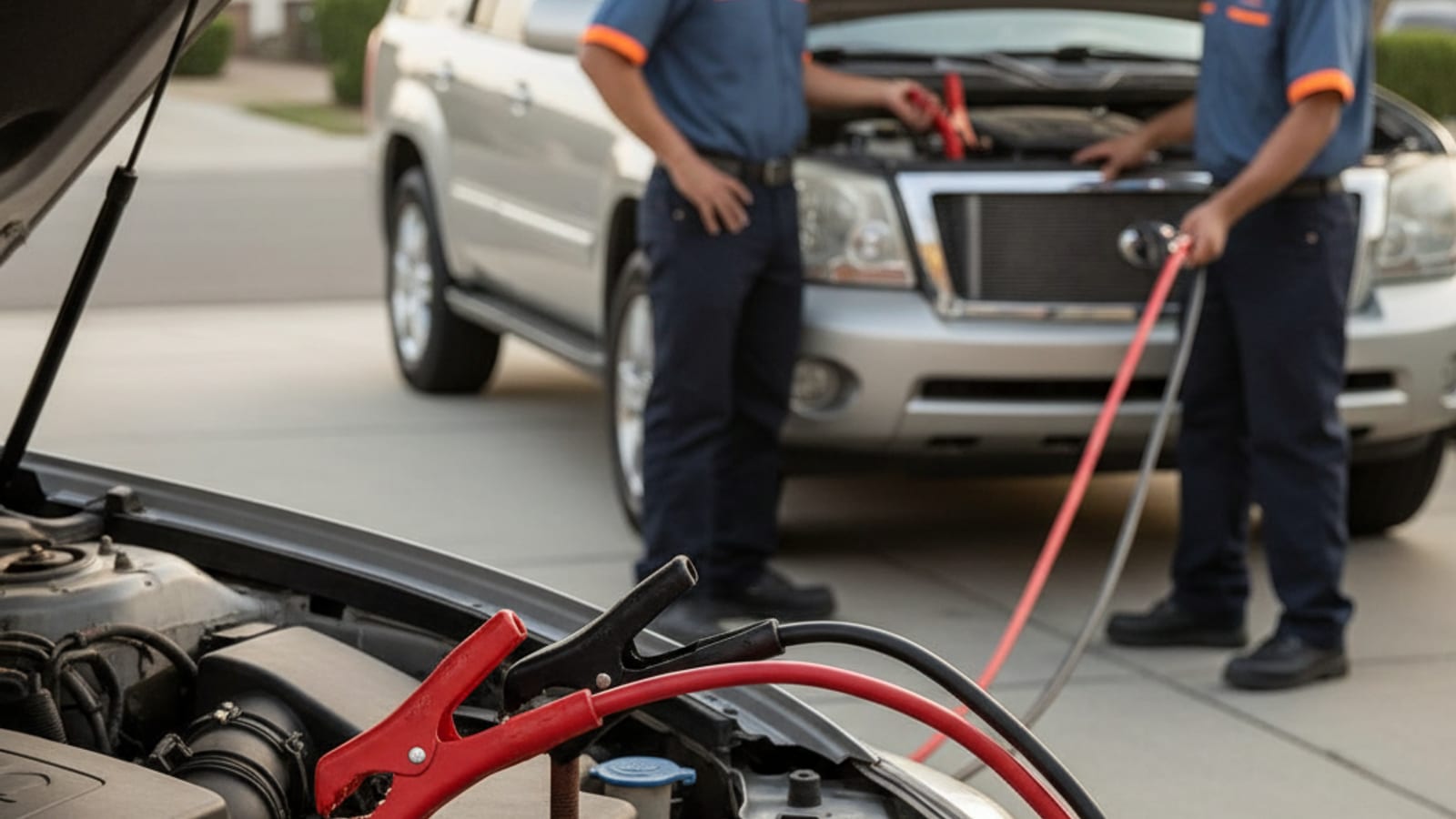
Jump-start a dead battery safely
Turn both cars off. Connect red to the dead battery's positive terminal, then red to the donor's positive. Connect black to the donor's negative. Attach the last black clamp to bare metal on the dead car's engine block, not its battery, to avoid sparks there. Start the donor, wait, start the dead car, then let it run before driving.
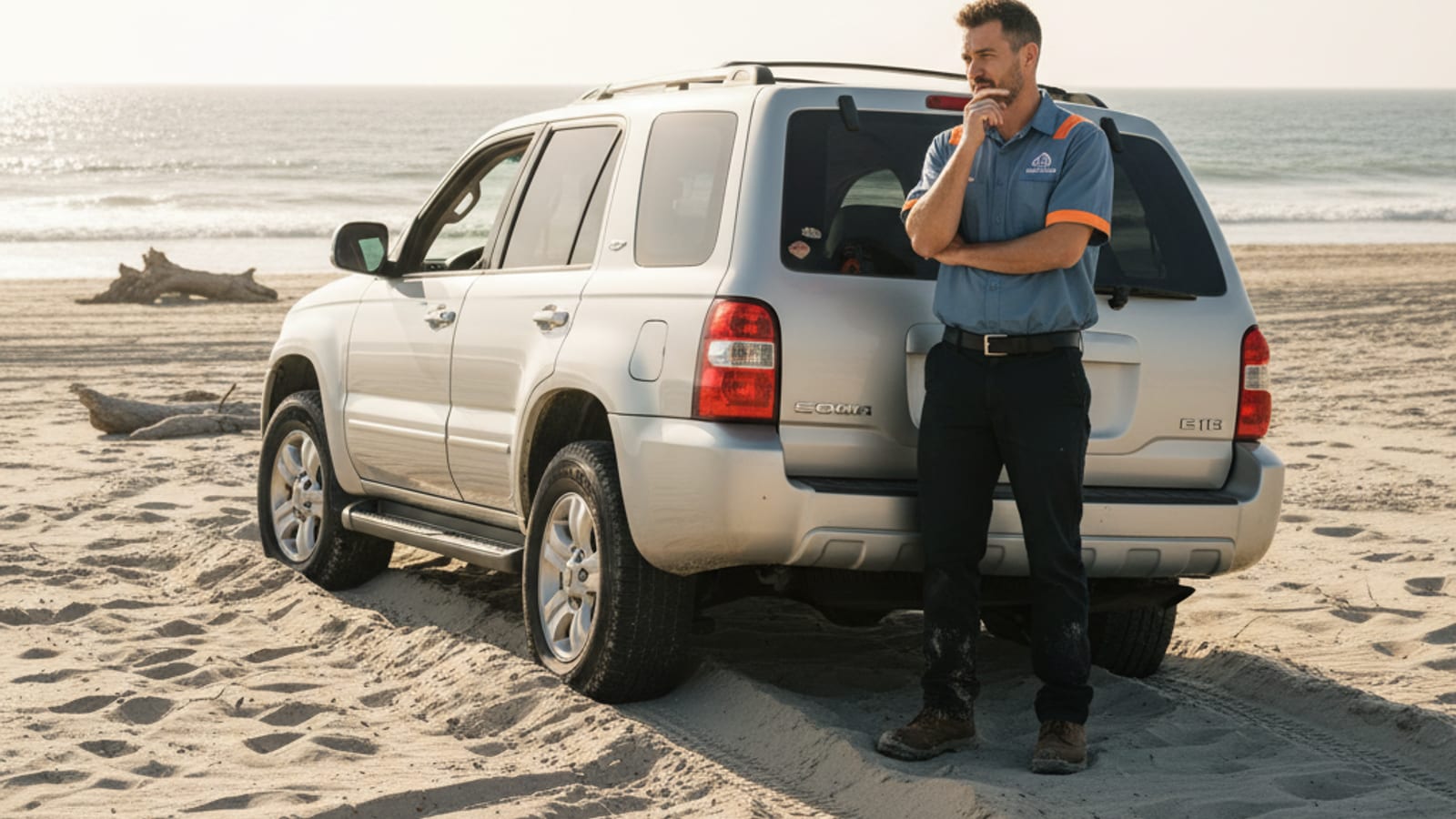
What to do if you slide on ice or hit a flooded street
Boston winters glaze bridges and ramps before flat streets, and a coastal storm or a king tide floods low waterfront streets faster than it looks. First step: stop making it worse.
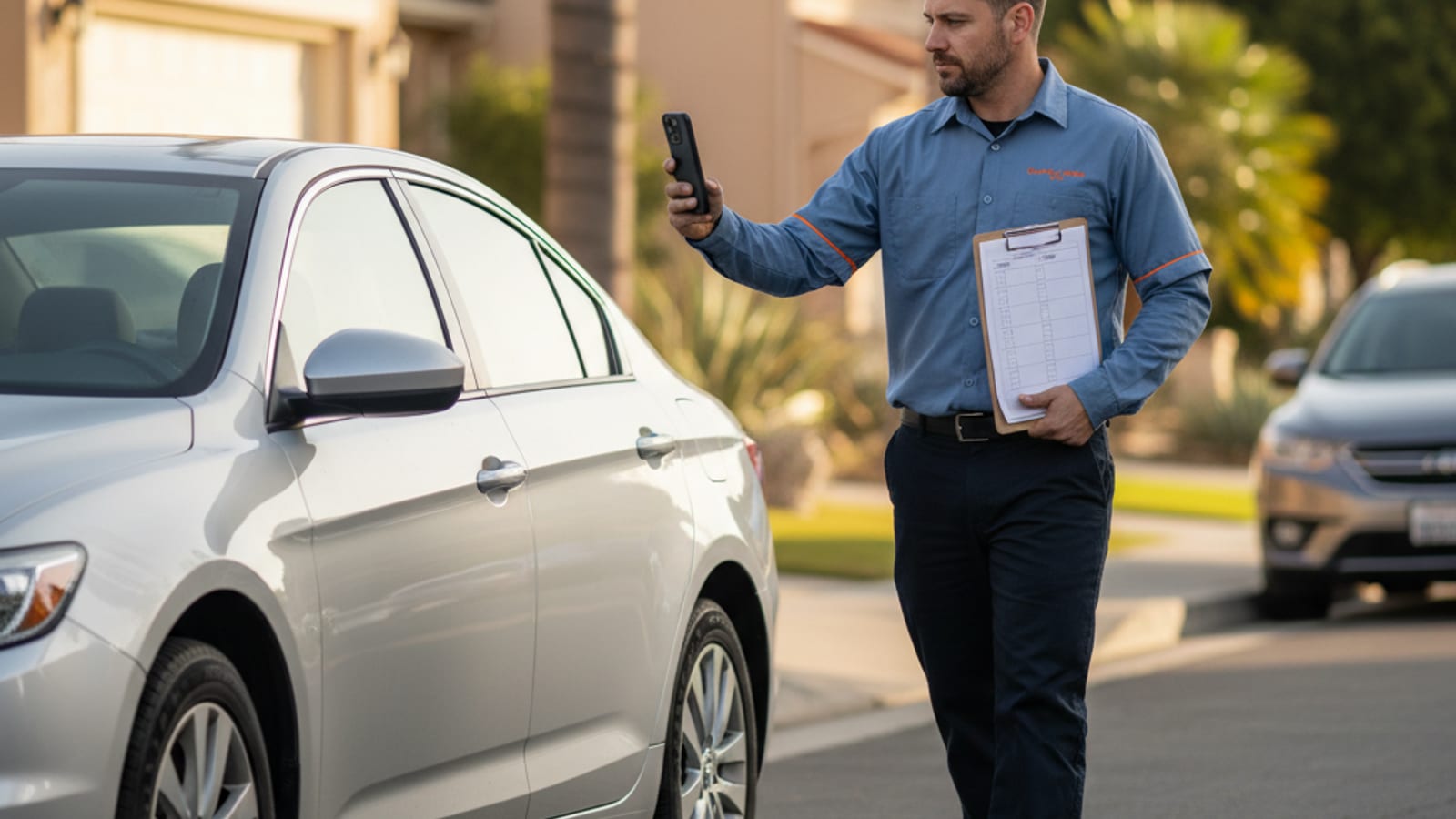
Prepare your vehicle for a tow
A few minutes of prep before the tow truck arrives saves time, avoids damage, and makes the whole call go faster.