How to check a Boston tow bill is legitimate
Massachusetts caps what a non-consensual tow can charge and sets rules a private-property tow must follow. Here is what you can actually check, and it takes five minutes.
What you'll learn
- The three kinds of tow in Massachusetts, and which rules apply to each
- What M.G.L. c. 266 s. 120D requires of a private-property tow
- How the state DPU maximum rates work as a ceiling you can check a bill against
- What to ask for on scene before you let anyone hook your vehicle
- Where the City of Boston fees are published, and how to use them as a reference point
Step by step
- Ask who ordered the tow. A tow you requested, a city or town tow, and a private-property tow are three different things with three different sets of rules.
- Ask for the price in writing before the truck rolls. For a tow you ordered, that number is the whole agreement.
- For a private-property tow, check the charge against the DPU maximums in 220 CMR 272.00: up to $132 within five miles, up to $4.40 per mile beyond, and storage capped per 24 hours.
- Look for the posted signs. A private-property tow needs "No parking" signs at every entrance and exit under c. 266 s. 120D.
- Ask whether the property owner notified the local police chief in writing before the tow, as the statute requires.
- Photograph the scene before anything moves, including the signs or the absence of one.
Massachusetts sets the ceiling on a non-consensual tow. The Department of Public Utilities publishes the maximum rates in 220 CMR 272.00: up to $132 to tow within five miles, up to $4.40 a mile beyond, and storage up to $35 per 24 hours at a lighted fenced lot or $17.50 otherwise, with no gate or after-hours fee. Those are maximums, not set prices, so a lawful charge can be lower but never higher.
Start with the right question
People usually ask whether a tow company is licensed. In Massachusetts the more useful question is what kind of tow this is, because the answer decides which rules and which price ceiling apply.
Step 1: work out which of three things happened
- You called them. You chose the company and agreed the price. Your protection here is the quote, in writing, before the truck rolls.
- The city or a town towed it. Inside Boston the vehicle is at the City of Boston lot at 200 Frontage Road and the fees are published. In a suburb it is at that town's own lot at the state-capped rate. You did not choose, and there is no company you get to pick.
- A property owner had it towed. This is the one M.G.L. c. 266 s. 120D governs, priced at the Department of Public Utilities maximums in 220 CMR 272.00.
Step 2: check a private-property tow against the statute
You do not need a database for this. The statute itself gives you a checklist you can run on the spot.
- Posted signs at every entrance and exit, under c. 266 s. 120D. No compliant signage, no lawful tow.
- Written notice to the local police chief before removal, which the property owner must give.
- The charge at or below the DPU maximums in 220 CMR 272.00: up to $132 within five miles, up to $4.40 per mile beyond, storage up to $35 or $17.50 per 24 hours.
- No gate fee or after-hours fee, because none exists in the regulation.
- Release with no charge if the company failed any provision of the statute.
Step 3: use the city's published fees as a benchmark
This is one place the Boston market works in a consumer's favour. The City of Boston publishes what it charges for a city tow: $90 to tow and storage at $3 per hour up to $15 per day at the lot at 200 Frontage Road, payable in cash, by money order, by cashier's check or by debit or credit card with a 2.5% fee on cards. Those are not private rates and they do not bind a private company, but they tell you what a large public operator charges for the same physical work, which is a useful reference when a number sounds wrong. A Boston street-cleaning tow is separate: a private company runs it at $108 plus $35 per day, so check which situation you are actually in before you argue about a number.
Step 4: check the equipment against the job
The single most common real-world problem is not a fraudulent company, it is the wrong truck. Many owner's manuals call for a flatbed on an all-wheel drive vehicle, an electric vehicle, a lowered car or anything that will not roll, so read the manual for your model and ask the assigned operator to follow it. If a wheel-lift truck arrives for an electric vehicle, that is the moment to stop and ask.
Step 5: know where to check and complain
| Body | Contact | What it handles |
|---|---|---|
| City of Boston towing | cityofboston.gov/towing/search, 617-635-3900 | Locating a vehicle towed inside the city, and the city tow and storage fees |
| Massachusetts DPU | mass.gov, 220 CMR 272.00 | The maximum rates for a non-consensual tow, statewide |
| Massport / Logan | 617-561-1673, Central Parking Garage Level 2 | A vehicle towed on Logan Airport property |
| Your town police department | Varies | A suburban tow, its lot, and the DPU-capped fee |
If something has already gone wrong
- Keep the paperwork. Any receipt or invoice is your record of what you were charged.
- Photograph the signs. A private-property tow with no posted signs at the entrances and exits was not lawful under c. 266 s. 120D.
- Check the number. A charge above the 220 CMR 272 maximums is not lawful, and a failure to meet the statute means the vehicle should be released free.
- Ask the right body. A city tow question goes to the City of Boston; a suburban tow question goes to that town's police department; the rate ceiling is the DPU's.
Rather have a pro handle it?
Towing and roadside service across Greater Boston. One local line, taking calls any hour.
Keep learning.
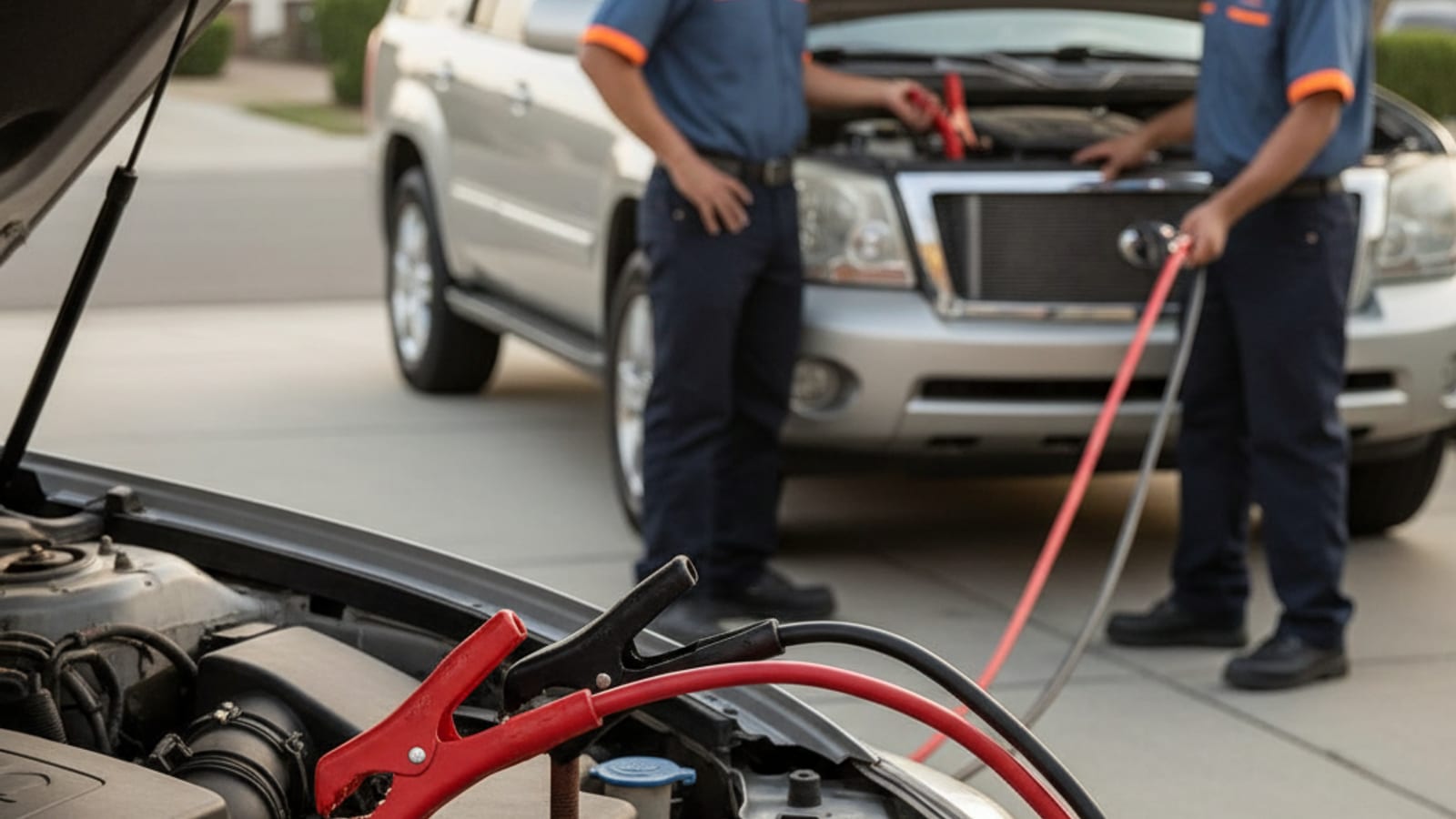
Jump-start a dead battery safely
Turn both cars off. Connect red to the dead battery's positive terminal, then red to the donor's positive. Connect black to the donor's negative. Attach the last black clamp to bare metal on the dead car's engine block, not its battery, to avoid sparks there. Start the donor, wait, start the dead car, then let it run before driving.
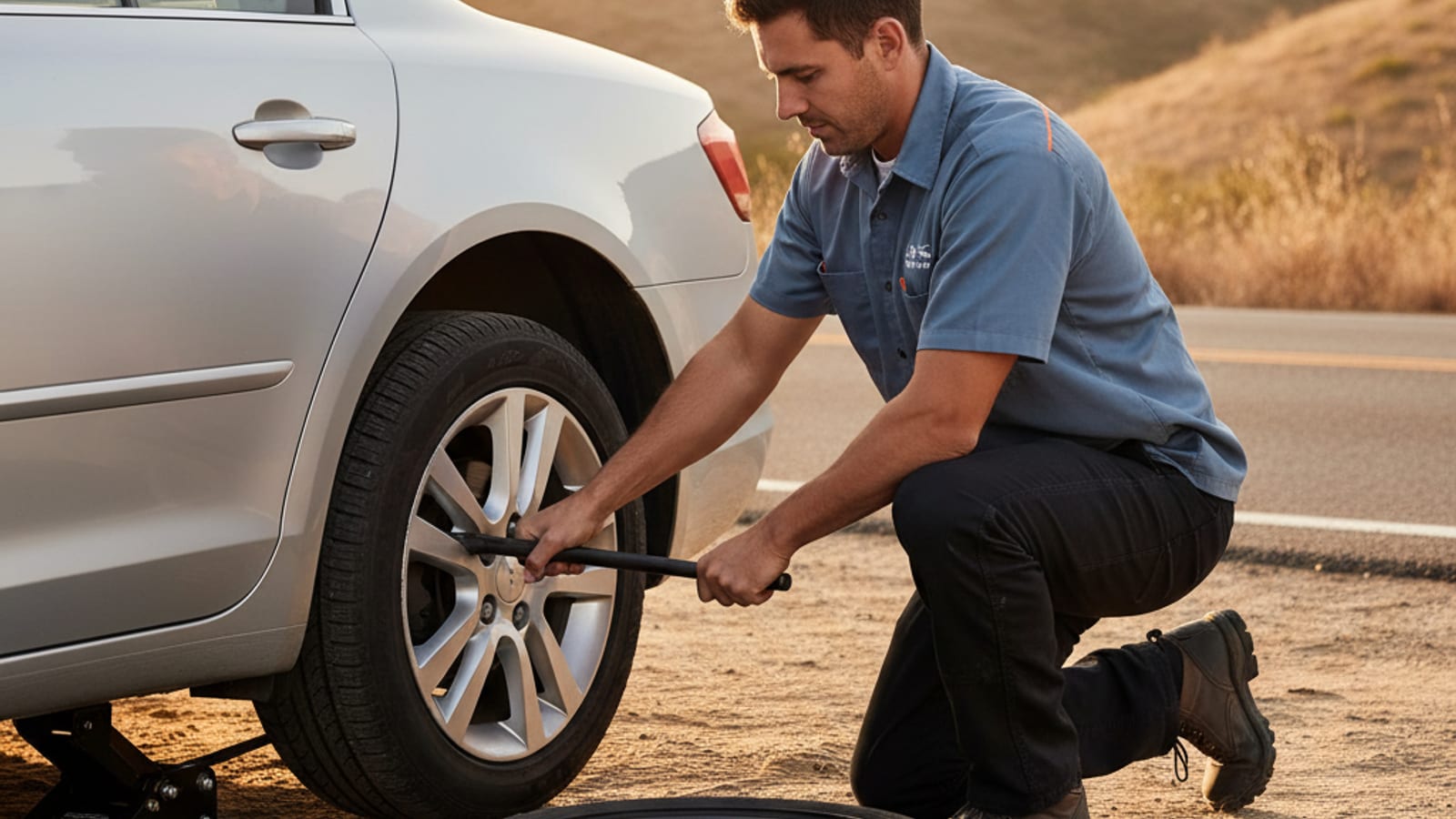
Change a flat tire on the side of the road
The difference between a 20-minute shoulder stop and an hour on the phone with a tow company is knowing where the spare and jack live before you need them.
What to do if you slide on ice or hit a flooded street
Boston winters glaze bridges and ramps before flat streets, and a coastal storm or a king tide floods low waterfront streets faster than it looks. First step: stop making it worse.